

“Why can’t we just all get along?” So says President Jack Nicholson in Tim Burton’s ‘Mars Attacks!’
It is surely a perfect metaphor for the often hostile division between those who advocate the Search for Extraterrestrial Intelligence (SETI) and the UFOlogists who assert that UFO reports are evidence of Extraterrestrial visitations.
Is it that both groups misunderstand each other? Or is it wilful? Are their respective worldviews simply incompatible?
Having read widely (and critically) in both fields, I would like to suggest some selected SETI books UFOlogists should read, and any reader who is relatively new to the subject or its history.
Contact With Alien Civilizations

I cannot recommend this book highly enough. If you were only prepared to read one book about SETI and its implications, it should be this one. Michael Michaud, a former US diplomat and advocate of the SETI Protocol, offers a broad view of the subject. There are some fascinating examples of SETI false alarms, and words of caution with regard to any unilateral Messaging to Intelligence (METI). It makes for sober reading.
Beyond Contact
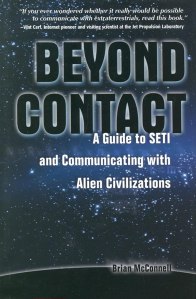
SETI’s technicalities can seem bewildering to non-scientists but Beyond Contact is a user-friendly guide for the lay reader. Brian McConnell also clarifies the enormity of the task in attempting to detect potential communications across the vast distances of time and space. For those who criticise SETI’s apparent ‘failure’ to detect unambiguous proof of ETI after six decades of searching, it’s important to have a thorough overview of the enormity and complexity of the task.
Confessions Of An Alien Hunter

Since the demise of Carl Sagan and Frank Drake, and effective retirement of Jill Tarter, Seth Shostak has become the popular face of SETI in the media. With wit and charm he describes contemporary SETI from the sharp end; from the tedium of long vigils scanning monitor readouts, to the adrenaline jolts of false alarms. Shostak delicately attempts to tackle the belief system of UFO proponents. If you want an overview of how SETI is conducted today, this is an engaging read that doesn’t blind you with the science.
Astrobiology, Discovery, Societal Impact

Why search for ETI at all? Astronomy and NASA Historian, Steven J Dick gives a rich background to the scientific and cultural ideas that have informed the search, and lays out various scenarios of how the discovery of life beyond Earth (intelligent or otherwise) might impact society. He does not sidestep the issue of UFOs in terms of the cultural impact of the subject. His earlier book, The Biological Universe, includes a chapter on UFOs that is arguably better than one in many dedicated UFO journals. Dick is a former secretary of METI International.
After Contact
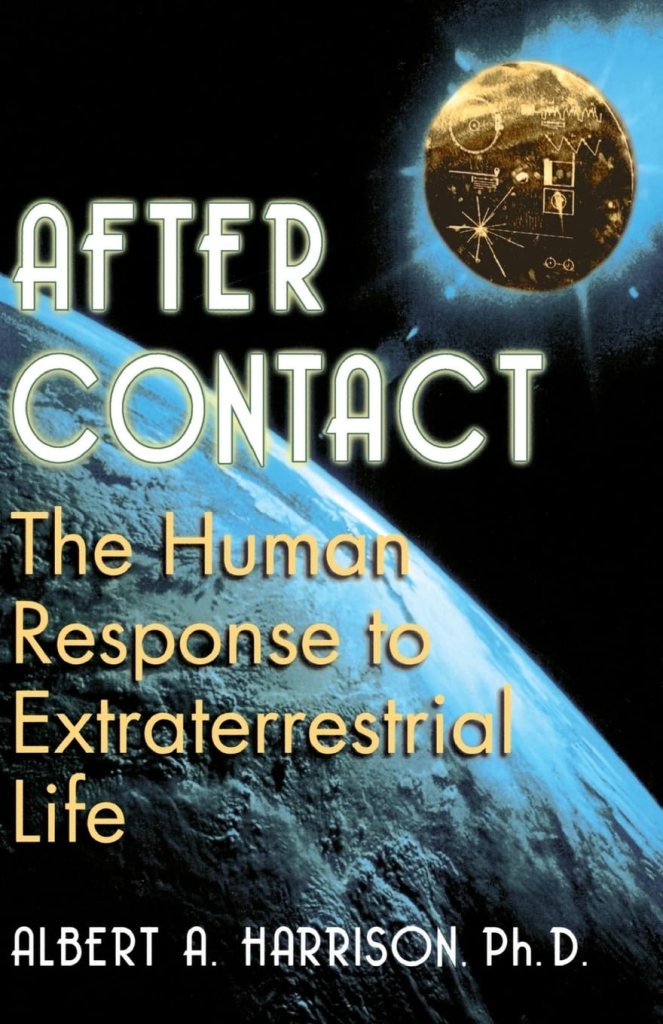
The late Albert A Harrison offers a fascinating psychological and sociological context for SETI that asks why we’re searching as much as it considers what might happen if we find ETI. The perspective of the so-called ‘soft sciences’ had been largely missing from the debate until this thoughtful contribution. And it also offers some fascinating insights into the conspiracy theories of government ‘cover-ups’.
John Keeling is a Content Provider & Curator for the EAAROcibo SETI UK Facebook page.
 JOHN KEELING MEDIA